
Fluoxetine: A Biologically Plausible Risk Amplifier in APOE4 Carriers
Fluoxetine is everywhere—but what if it’s quietly amplifying Alzheimer’s risk in certain patients? I’m a psychiatric prescriber, and to my knowledge, no one is talking about this in clinical practice.

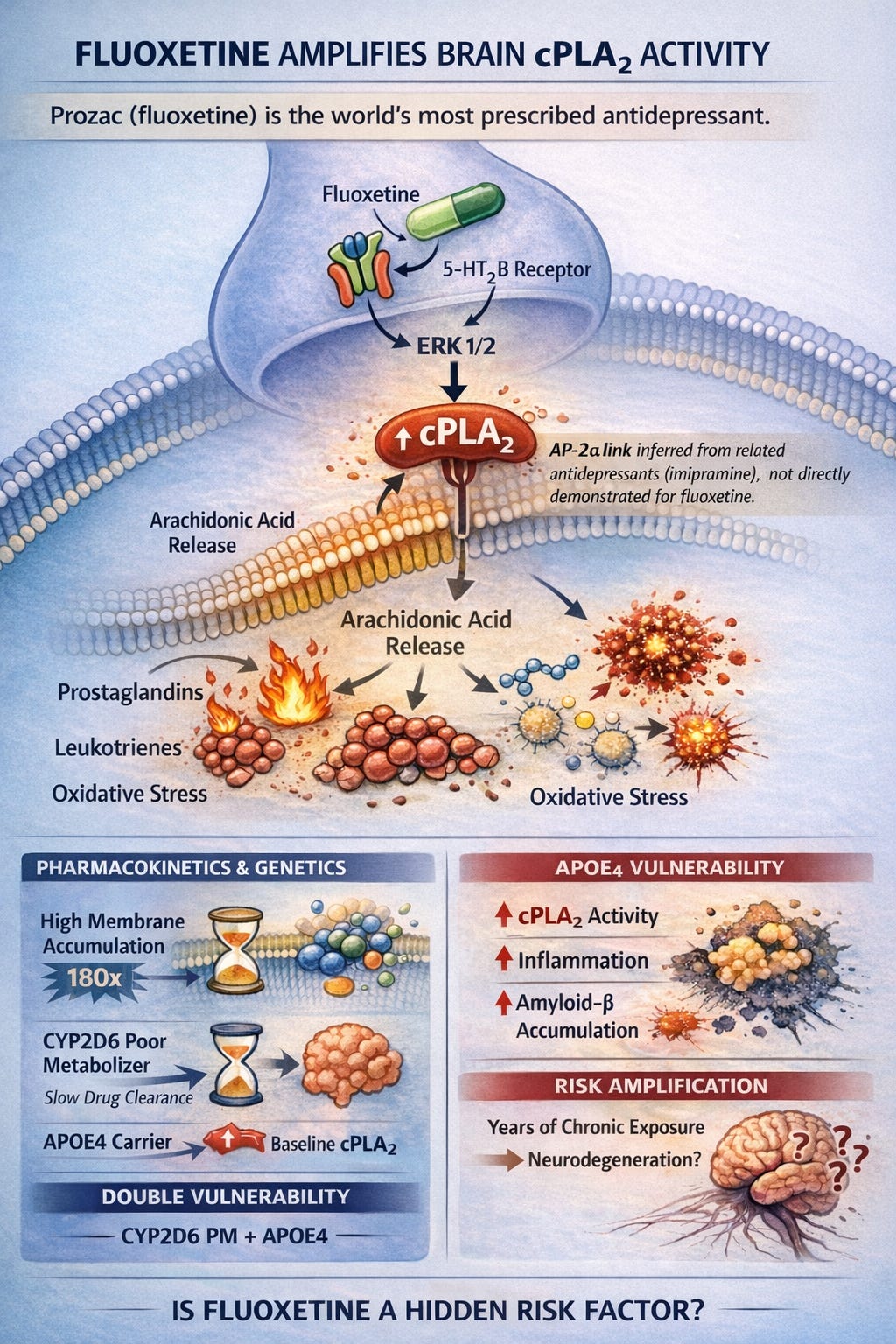
Fluoxetine is one of the most widely prescribed antidepressants worldwide, often continued for years and frequently started in midlife—precisely when neurodegenerative risk trajectories begin to diverge. Yet despite decades of use, fluoxetine is still prescribed as if its effects on brain lipid signaling and inflammation are irrelevant. This assumption is increasingly difficult to defend.
Substantial preclinical literature shows that fluoxetine upregulates cytosolic phospholipase A₂ (cPLA₂), a key enzyme controlling brain inflammation, oxidative stress, and synaptic vulnerability. This same pathway is already overactive in APOE4 carriers—the population at highest genetic risk for Alzheimer’s disease.
The convergence raises an uncomfortable question: are we routinely prescribing a drug that amplifies a known disease pathway in genetically susceptible brains—without ever acknowledging the risk?
What is cPLA₂ and why does it matter?
cPLA₂ releases arachidonic acid (AA) from brain cell membranes. AA is then converted into prostaglandins, leukotrienes, and other bioactive lipids that regulate synaptic function, cerebral blood flow, and oxidative stress. Think of cPLA₂ as a master switch: when activated, it commits the brain to an inflammatory response.
Short-term activation is normal and even beneficial. The problem arises when this switch gets stuck in the “on” position—particularly in brains already primed for inflammation.
Fluoxetine turns up the switch
Fluoxetine increases cPLA₂ expression, phosphorylation, and enzymatic activity in brain tissue at therapeutic doses. This occurs via 5-HT₂B receptor activation, which triggers ERK1/2 phosphorylation, resulting in both post-translational activation and increased transcription of cPLA₂.
Chronic treatment elevates arachidonic acid turnover in the brain—meaning more inflammatory signaling over time.
What makes fluoxetine different from other SSRIs?
Keep reading with a 7-day free trial
Subscribe to NeuroLipid Notebook to keep reading this post and get 7 days of free access to the full post archives.